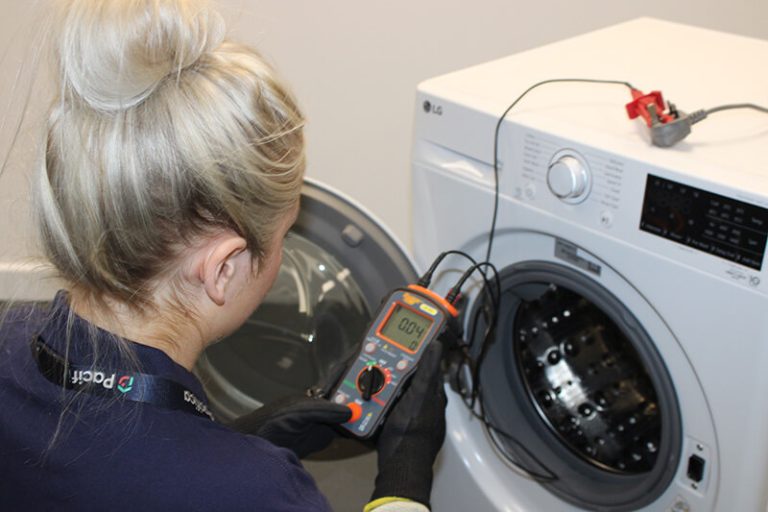
Washing Machine Repair Guide
Your washing machine is dependable until it isn’t, so when it finally falters, even a small fault can quickly become a serious issue. It’s no wonder washing machines rank among the most frequently repaired appliances in homes across High Wycombe.
The good news is that many of the most frequent problems have straightforward causes and, in some cases, fixes. Understanding how these problems connect is the first step to fixing them properly.
When Your Washer Won’t Drain
A washing machine that stops mid-cycle and has standing water in the drum is almost always a drainage issue. Most of the time the two main suspects are the drain pump and the filter.
1. Check the drain pump
Your washing machine’s pump is responsible for forcing water out through the drain hose. Before assuming the worst, locate your machine’s filter access panel check for blockages. Coins, hair grips, and socks are often times the culprits. Once the filter is clear, run a short cycle and listen. A pump that’s straining, humming but not moving water, or completely silent when it should be active likely needs repairing or replacing.
2. Inspect the Hose
A kinked, clogged, or improperly positioned drain hose can create the same symptoms as a faulty pump. Pull the machine out from the wall and check that the hose isn’t bent sharply or pushed too far into the standpipe, creating a siphon effect that prevents proper drainage.

When the Drum Won’t Spin
Clothes coming out soaking wet after a full cycle is one of the most disruptive appliance faults in a household. There are several causes, and not all of them require expensive parts.
1. Load balancing
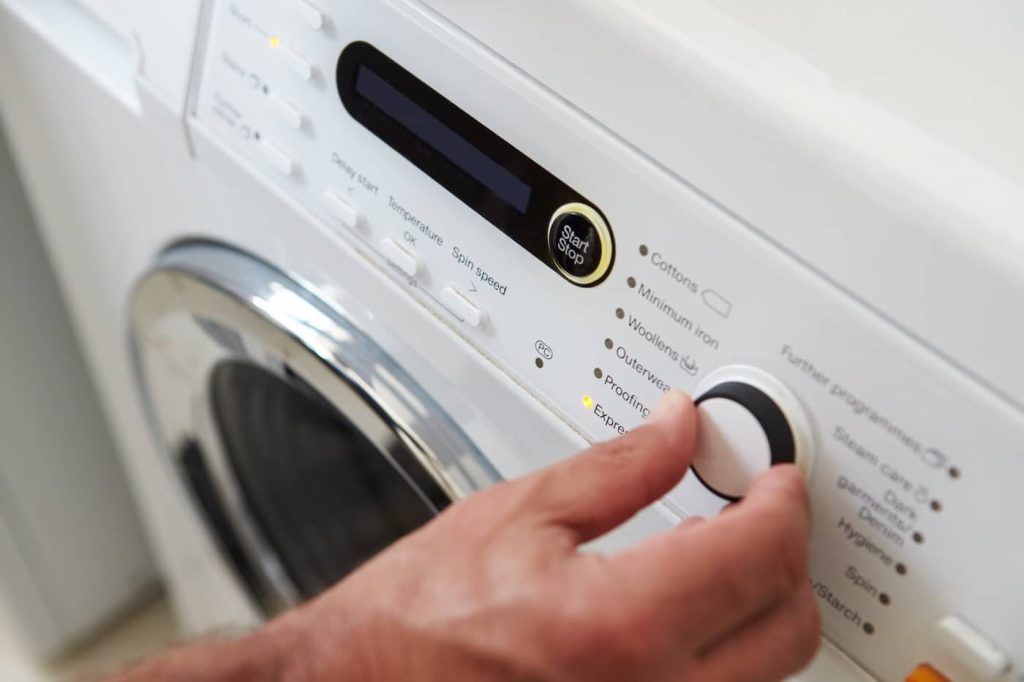
This is the most overlooked cause of spin failures. Most modern washing machines are designed to detect uneven loads and will either reduce spin speed or stop spinning altogether to protect the drum bearings. Make sure you’ve distributed your washing evenly and run the cycle again.
2. motor faults
If balancing doesn’t resolve it, the issue may lie with the carbon brushes, a worn drive belt, or a faulty motor control board. Brush wear in particular is extremely common in older machines. Fortunately, worn brushes are inexpensive to replace and can restore full spin function without a major repair bill. A control board or drive belt will need to be looked at by our team.
3. Door lock issues
Many machines won’t enter the spin phase if the door interlock isn’t signalling correctly. A defective or worn door latch will prevent the cycle from starting.
When Your Machine Is Leaking
Leaks can originate from several places, so location matters. The rubber seal around the door opening can tear or crack. A worn gasket won’t seal under pressure,
Inspect the inlet hoses and the outlet hose can also crack, loose jubilee clips, or degrade. These are easy to miss but frequently cause slow leaks that worsen over time.

Get in touch for Trusted Washing machine Repairs
If your washer isn’t draining, won’t spin, or is leaking water, don’t leave it. Small faults compound quickly, and early intervention almost always means a lower repair bill. Get in touch with us today and we’ll diagnose the problem properly.
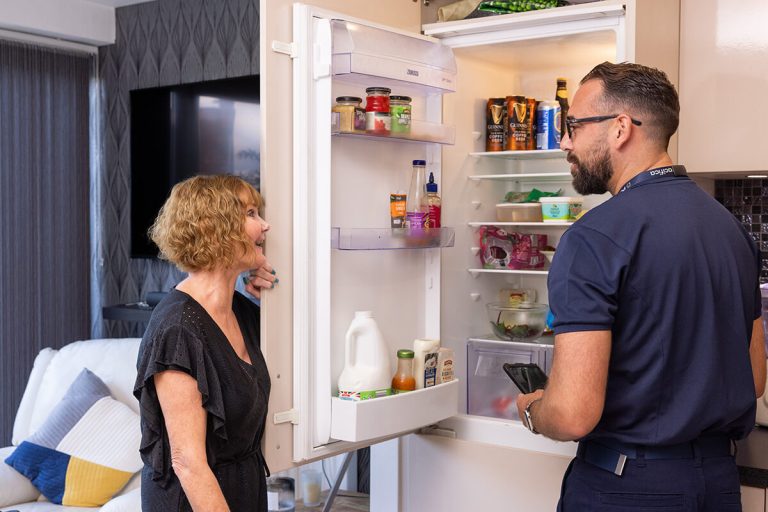
Many washing machine repairs fall within the expertise of our team here at Pacifica. Based in High Wycombe we serve the whole of the area in and around the Buckinghamshire town, from the centre out to the suburbs and nearby villages.
If you have an issue with your washing machine or any other appliance such as a fridge, dishwasher, freezer, oven or tumble dryer, our team are here to help. Simply call us on tel:07801678038, email us at tahir@pacificalocal-highwycombe.co.uk or fill in the contact us form and we’ll get back to you ASAP.